Most CRM projects fail because of decisions that were never made before the first record was created. Who owns the data? What is a qualified lead, exactly? What stage does a deal move to when you send a proposal? What should happen automatically when a deal is won? Without clear, documented answers, the configuration reflects assumptions, and the team works around it. This part of the Zoho CRM Sales Hub covers the decisions and the guides for making them.
The Five Decisions to Make First
| Decision | What goes wrong without it | What to decide |
|---|
| 1. Data ownership | Duplicates accumulate, picklists drift, required fields get bypassed; within a year management stops trusting the data | Name one person responsible for data quality and configuration, define the rules, and give them authority to enforce them |
| 2. Lead definition | Reps convert leads at different points, so pipeline data is not comparable | Write one sentence defining a converted lead, such as a qualifying conversation confirming budget, authority, need and timeline |
| 3. Pipeline design | Default stages describe a generic enterprise sale nobody follows | Map the real stages with the sales team and name each for the client’s observable situation |
| 4. Automation boundaries | Too little and the CRM is a database; too much and it fires where it should not | List repetitive tasks, rank by frequency and cost of failure, automate from the top, and never automate a process that has not run manually first |
| 5. Reporting requirements | Dashboards are an afterthought and reviews still run from spreadsheets | Start from the three to five questions management asks weekly and design the data so they are answerable live |
Why CRM Implementations Fail
Beyond the five decisions, projects fail for strategic and behavioural reasons rather than technical ones. Three root causes underlie most of them: software-first thinking, where the tool is configured before the process is documented; no executive sponsorship, so a CRM nobody uses in management meetings is treated as optional; and over-configuration, where a system built for every scenario is too slow for routine use. The full analysis is in the top ten reasons CRM projects fail.
Pricing checked October 2026. These are Zoho’s published rates at the time of writing. They change over time, vary by region and currency, and may differ inside Zoho One, so confirm the current figures on the official pricing page linked above before you decide.
Guides on This Topic
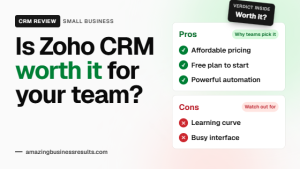
Also on this topic: common Zoho CRM mistakes, how to choose a CRM, Zoho CRM’s pros and cons for small business and the Zoho CRM pricing guide.
Running a Strategy Session
- Owners and sales leads in one room for two hours, with the five decisions on the agenda.
- Write each decision down in one sentence; argue until the sentence is true.
- Map the pipeline on a whiteboard with the people who sell.
- List the weekly management questions and check the pipeline can answer them.
- Only then open the CRM.
Common Mistakes
- Letting the vendor demo set the process.
- A CRM champion with no authority over data.
- Pipeline stages copied from the last company someone worked at.
- Reporting designed after go-live.
Questions People Ask About CRM Strategy & Buyer’s Guide
Short answers, drawn from the guide above.
What should I decide before implementing a CRM?
Data ownership, the definition of a qualified lead, pipeline stages, automation boundaries and the weekly reporting requirements.
Why do CRM projects fail?
Mostly for strategic reasons: software chosen before the process is documented, no executive sponsorship, and over-configuration that kills adoption.
Who should own CRM data?
One named person with authority to enforce standards, not a team.
How do I define a lead?
In one sentence everyone applies, such as a qualifying conversation that confirmed budget, authority, need and a realistic timeline.
Should I automate everything from day one?
No. Automate from the top of a ranked list of repetitive tasks, and only processes that have run manually first.
Does ABR offer a strategy review?
Yes, a free 30-minute session that reviews your process and says how to structure the CRM for it.
{"@context":"https://schema.org","@type":"FAQPage","mainEntity":[{"@type":"Question","name":"What should I decide before implementing a CRM?","acceptedAnswer":{"@type":"Answer","text":"Data ownership, the definition of a qualified lead, pipeline stages, automation boundaries and the weekly reporting requirements."}},{"@type":"Question","name":"Why do CRM projects fail?","acceptedAnswer":{"@type":"Answer","text":"Mostly for strategic reasons: software chosen before the process is documented, no executive sponsorship, and over-configuration that kills adoption."}},{"@type":"Question","name":"Who should own CRM data?","acceptedAnswer":{"@type":"Answer","text":"One named person with authority to enforce standards, not a team."}},{"@type":"Question","name":"How do I define a lead?","acceptedAnswer":{"@type":"Answer","text":"In one sentence everyone applies, such as a qualifying conversation that confirmed budget, authority, need and a realistic timeline."}},{"@type":"Question","name":"Should I automate everything from day one?","acceptedAnswer":{"@type":"Answer","text":"No. Automate from the top of a ranked list of repetitive tasks, and only processes that have run manually first."}},{"@type":"Question","name":"Does ABR offer a strategy review?","acceptedAnswer":{"@type":"Answer","text":"Yes, a free 30-minute session that reviews your process and says how to structure the CRM for it."}}]}