Zoho CRM for Small Business: The Complete Guide to Getting It Right
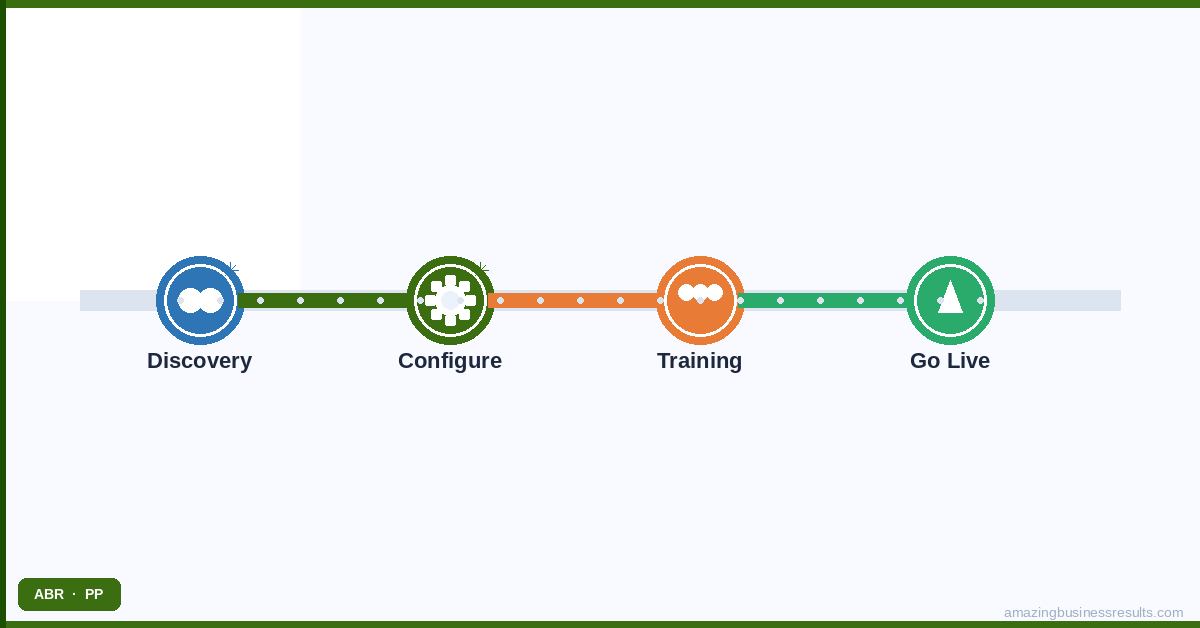
Step 1: Get the Foundation Right Before Configuring Anything
The most common small business CRM mistake: opening the configuration panel and starting to build before documenting the process. The result is a CRM that reflects what seemed logical in the moment rather than how the business actually sells.
Before touching any settings, answer these questions in writing:
- What is your current sales process? Write the stages as a numbered list. Not what you think it should be — what actually happens today, in the order it actually happens.
- What is a qualified lead? Write the one-sentence definition. Something specific: “A lead is qualified when we have confirmed they have a project starting within six months and a budget above $X.”
- What happens when a deal closes? Write the downstream actions: notification to the fulfilment team, invoice creation, onboarding sequence, whatever applies to your business.
- What information does management need to see weekly? Write three to five questions. These become your dashboard. If the CRM cannot answer these questions from live data, the configuration is incomplete.
These four answers drive every configuration decision. For the full strategic framework, see the CRM strategy hub.
Step 2: Configure the Data Model
Get Your Modules Right
Zoho CRM’s standard modules — Leads, Contacts, Accounts, Deals, Activities — cover the requirements of most small business sales processes without any custom configuration. The temptation to add custom modules or to rename standard modules before you have used the system for 90 days is worth resisting: until you understand how the standard modules behave and interact, you cannot design custom ones intelligently.
For the explanation of how each standard module works and when to use each, see the Leads, Contacts, Accounts and Deals guide.
Customise Fields to Capture What Matters
The default fields in Zoho CRM capture generic sales information. Your business has specific information it needs to capture consistently — the type of project, the source of the referral, the product or service category, the decision-maker’s industry. Add custom fields for these specifics early, before data entry begins. Custom fields added after hundreds of records have been created require retroactive data entry that rarely happens.
Field discipline: only add fields for information you will actually use in reports or automation. Every field that is never used in a report or automation makes the data entry form longer without adding value. Long forms produce incomplete records. Short, purposeful forms produce complete, reliable data.
Design Your Pipeline Stages
Replace Zoho’s default pipeline stages with stages that reflect your actual sales process. Each stage should be named after the client’s situation, not the rep’s action: “Proposal Under Review” rather than “Proposal Sent”; “Negotiating Terms” rather than “In Negotiation”; “Contract Signed” rather than “Won.”
Assign probability percentages to each stage based on your historical win rate at that stage — not on Zoho’s defaults. If your deals that reach the Proposal Under Review stage close at 60%, set that stage to 60%. If they close at 40%, set it to 40%. Your forecast will then be based on your actual performance history rather than a software company’s guess.
Step 3: Automate the High-Value Repetitive Tasks
Lead Follow-Up: The Highest-Return Automation
For most small businesses, the automation with the highest return on configuration time is lead follow-up. A structured cadence sequence that runs automatically for every new lead — regardless of whether the sales rep remembers to follow up — eliminates the most common small business revenue leak: leads that go cold because a busy rep forgot to call them back.
A minimum viable follow-up cadence for a small B2B sales team: Day 0 — automated acknowledgement email on lead creation; Day 1 — call task for the rep; Day 3 — follow-up email if no contact; Day 7 — second call task; Day 14 — final check-in email before archiving. Five touchpoints executed automatically for every lead regardless of team capacity. See the lead nurturing workflows guide for the full configuration.
Deal Stage Automation: What Should Happen at Each Stage
When a deal advances to a new stage, something should happen automatically. When a deal enters Proposal Under Review, an email should notify the proposal approver. When a deal is marked Closed Won, a task should be created to initiate the client onboarding process. When a deal has been in any stage for more than fourteen days with no activity, a task should be created flagging it for management review.
These stage-triggered automations take one to two hours to configure. They prevent the most common small business pipeline management failure: deals that sit in a stage indefinitely because nobody flagged them for action.
Lead Assignment: Route Without Manual Decisions
If your business has more than two salespeople, manual lead assignment is a bottleneck and a source of inconsistency. Zoho CRM’s assignment rules route leads to the right person based on lead source, geography, product type or round-robin rotation — without any management decision required. See the automated lead assignment guide.
Step 4: Build the Three Dashboards You Actually Need
Dashboard 1: The Active Pipeline View
A saved view on the Deals module showing all open deals sorted by stage and by last activity date. The purpose: the rep opens this view every morning and sees their full pipeline, sorted to show the deals that have not been touched most recently at the top. This replaces the daily CRM review that previously required manual report preparation.
Dashboard 2: The Lead Source Report
A summary report on the Deals module grouping all closed deals by the Lead Source field, showing deal count and total deal value per source. Updated from live data. Reviewed monthly. The purpose: to answer “which channels are generating revenue” with evidence rather than instinct. Most small businesses are surprised by this report — the channels that seem to generate the most activity are rarely the channels generating the most revenue.
Dashboard 3: The Pipeline Health Dashboard
A dashboard combining three metrics: total open pipeline value (by stage), deals with no activity in the last 14 days (the stale deal flag), and the current month’s closed revenue vs target. The purpose: for the business owner or sales manager, this dashboard answers the three most important sales management questions — what is in the pipeline, where is it stalling and how are we tracking against plan — from a single view without any manual preparation.
Common Small Business Zoho CRM Mistakes to Avoid
- Importing dirty data at the start. Clean and deduplicate before importing. Every duplicate that enters the CRM will need to be dealt with eventually — and it is much easier before any activity is logged against the records.
- Making too many fields required. Required fields that slow down data entry produce workarounds: reps enter placeholder data to satisfy the requirement. The data is complete but wrong. Make only the fields that are genuinely essential to qualification or automation required.
- Configuring for the future rather than the present. Build the CRM for how the business operates today, not for how it might operate in three years. Complexity added early for future use cases that never materialise creates the configuration overhead that kills adoption.
- No CRM owner. Name the CRM owner on day one. Without ownership, the configuration drifts and the data quality deteriorates.
See also: Zoho CRM pricing guide Revenue Engine Pro sales hub.
Frequently Asked Questions
Is Zoho CRM good for small businesses?
What Zoho CRM plan should a small business start with?
How long does it take to set up Zoho CRM for a small business?
Can a small business implement Zoho CRM without a consultant?
Can ABR help us set up Zoho CRM for our small business?